

Why Homeowners Choose Asphalt for Driveway Installation
Installing an asphalt driveway represents a substantial home improvement that combines visual appeal with practical performance. Asphalt is valued for its durability, cost-efficiency and straightforward maintenance requirements. It can improve curb appeal while serving daily needs, and understanding cost, upkeep and long-term value helps homeowners make a measured decision aligned to their budget and objectives.
This article outlines the core benefits of asphalt driveway installation, reviews typical costs, details maintenance practices that extend service life, and highlights environmental considerations. It also explains how to select a qualified contractor to achieve a reliable, high-quality outcome.
What Are the Key Advantages of Installing an Asphalt Driveway?
Asphalt driveways deliver practical, cost-conscious and durable paving solutions frequently chosen by homeowners.
- Cost-Effectiveness: Asphalt is often more affordable than other paving materials, providing a quality finish without breaking the bank.
- Durability: Designed to withstand weather changes and heavy traffic, asphalt is resilient and long-lasting.
- Ease of Maintenance: With proper care, asphalt driveways can last 15 to 20 years, making regular maintenance a worthwhile investment.
Homeowners benefit from asphalt’s balance of functionality and appearance, gaining both financial and practical advantages.
How Does Asphalt Provide Durability and Weather Resistance?
Asphalt is known for its flexibility and resistance to cracking, which helps it tolerate heavy loads and temperature shifts better than some alternatives. That flexibility reduces deformation and the need for frequent repairs.
Asphalt also performs well under varied weather conditions, including rain and snow, maintaining structural integrity for vehicle and pedestrian use when installed and maintained correctly.
Why Is Asphalt Considered Cost-Effective Compared to Other Materials?
When comparing paving costs, asphalt frequently provides lower initial installation expenses while delivering a functional, durable surface. Initial installation expenses for asphalt typically range from $3 to $7 per square foot, a figure often below comparable concrete rates.
In addition, asphalt’s lower repair and maintenance demands can produce meaningful savings over the driveway’s lifecycle, making it an economical option for homeowners seeking a balance of cost and longevity.
Economic Comparative Analysis of Asphalt and Concrete Pavements
This paper provides a comparative economic assessment of asphalt and concrete pavement designs using life-cycle cost and total installed cost analyses. It examines whether the higher initial construction costs of concrete pavements are offset by lower maintenance needs or longer service life, identifies the data necessary to address that question, and outlines an analytical methodology. The discussion highlights factors that influence pavement selection, including initial construction costs, rehabilitation intervals, maintenance strategies and user costs.Comparative Economic Analysis of Asphalt and Concrete Pavements, 1984
What Is the Typical Cost of Asphalt Driveway Installation?
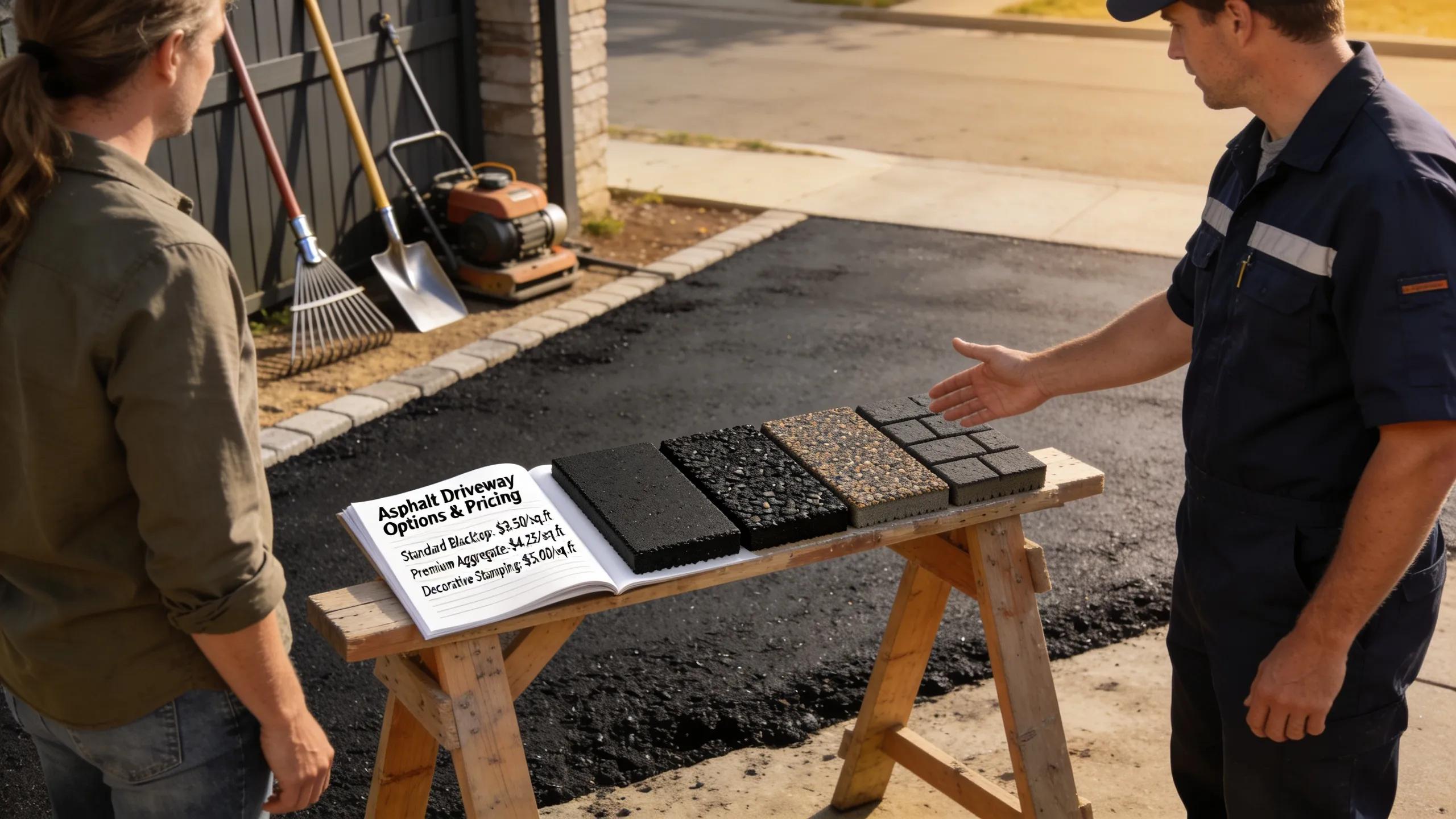
Knowing the expected costs for asphalt driveway installation is important for planning and budgeting before you engage contractors or select materials.
- Typical Price Range: The average cost of installing an asphalt driveway typically varies between $3,000 and $7,000.
- Factors Affecting Costs: Several factors can influence the overall cost, such as driveway size, location, and material quality.
Establishing a clear budget enables homeowners to evaluate options and secure the outcome they expect within financial constraints.
Which Factors Influence Asphalt Driveway Installation Costs?
Driveway installation costs vary with several determinative factors:
- Location: Local prices for materials and labor can vary significantly.
- Material Quality: Higher-grade asphalt mixtures may result in increased upfront costs but can improve the longevity of the driveway.
These considerations affect the final price and should be reviewed when planning a project.
How Does Asphalt Compare to Concrete Regarding Installation Expenses?
Comparing asphalt and concrete reveals key cost differences and lifecycle implications.
- Installation Costs: As mentioned earlier, asphalt generally requires a lower initial investment—around $3 to $7 per square foot—compared to concrete’s range of approximately $6 to $12 per square foot.
- Long-Term Savings: While concrete may look appealing and provide a longer lifespan, its maintenance and repair expenses increase over time, making asphalt a wise choice for budget-conscious homeowners.
Understanding these cost dynamics helps homeowners choose the surface that best fits their financial and performance priorities.
Pavement Treatment Cost-Effectiveness: A Life-Cycle Analysis
This study evaluates the effectiveness and cost-efficiency of various pavement treatments through life-cycle cost analysis over a 20-year horizon. It examines three asphalt pavement treatments—hot-mix asphalt overlay, cold in-place recycling and full-depth reclamation—and reports that effectiveness and cost-effectiveness vary substantially depending on pavement condition, traffic levels and climate.
Effectiveness and cost-effectiveness evaluation of pavement treatments using life-cycle cost analysis, L Yao, 2019
How Can Homeowners Maintain Their Asphalt Driveways for Longevity?
Regular maintenance is essential to preserve an asphalt driveway’s condition and extend its service life. A mix of routine care and periodic professional work keeps the surface functional and attractive.
- Importance of Maintenance: Regular upkeep prevents small issues from escalating into larger, costlier problems.
- Typical Maintenance Tasks: Common maintenance tasks include sealing cracks and applying sealcoating every 2 to 3 years.
Consistent maintenance improves curb appeal and prolongs the driveway’s useful life.
What Are Recommended Asphalt Driveway Maintenance Tips?
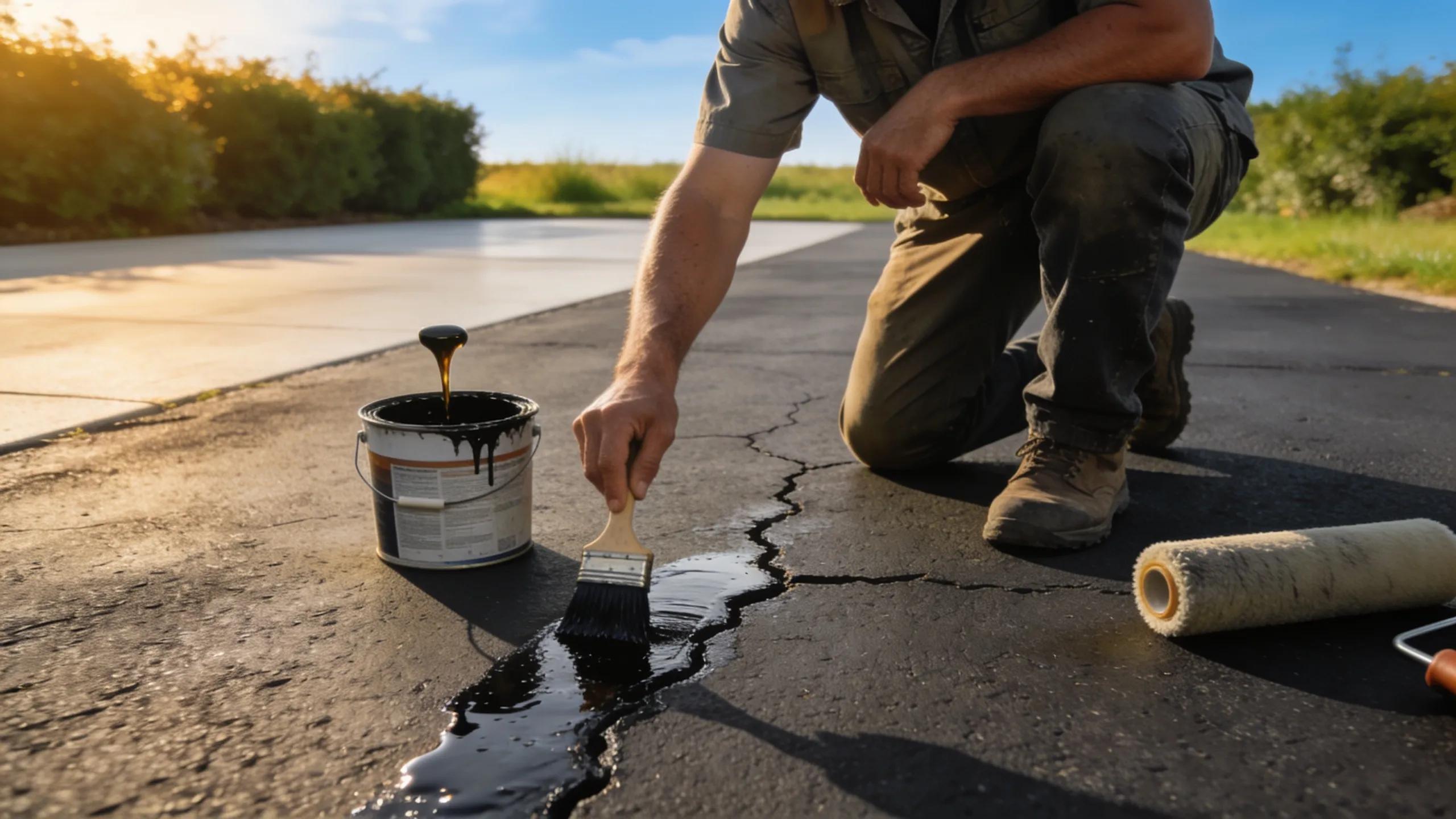
To preserve an asphalt driveway, apply the following practical maintenance measures:
- Seal Coat Every 2-3 Years: Applying sealant can help protect against UV rays and weather damage.
- Fill Cracks Promptly: Addressing cracks immediately avoids more significant repairs later on.
- Remove Debris Regularly: Keeping the surface clear of leaves and dirt prevents discoloration and deterioration.
Following these steps will help maintain performance and reduce the need for major repairs.
How Does Regular Sealing Extend Asphalt Driveway Lifespan?
Sealing is a key maintenance task that reinforces surface protection and helps limit damage from traffic and weather.
- Sealing Frequency: Homeowners should plan to seal their asphalt driveways every 2 to 3 years to maintain protection from elements.
- Impact on Longevity: Regular sealing not only enhances the appearance of the driveway but also extends its life by resisting wear from traffic and weather elements.
Adopting a scheduled sealing routine demonstrates responsible ownership and supports long-term value.
What Repair and Resurfacing Options Are Available for Asphalt Driveways?
Knowing repair and resurfacing choices helps owners address issues effectively and preserve driveway integrity.
- Type of Repairs: Common repairs may include pothole filling, crack sealing, and surface leveling, each addressing specific problems that may arise over time.
- When to Resurface: Resurfacing may be necessary if the driveway exhibits extensive surface wear or structural defects that repairs cannot address.
When Is Driveway Resurfacing Necessary and What Does It Involve?
Resurfacing offers a cost-effective option for driveways with significant surface deterioration. Typical indicators include widespread cracking or surface water pooling that repairs no longer remedy.
- Signs of Damage: Excessive cracking and surface pooling may warrant resurfacing.
- Process Overview: This involves cleaning the existing surface and applying a new layer of asphalt to restore functionality and aesthetics.
Resurfacing can restore an older driveway’s performance without the expense of full replacement in many cases.
How Do Professional Repairs Improve Asphalt Driveway Durability?
Engaging qualified professionals ensures repairs address root causes and meet workmanship standards that support longer service life.
- Quality Assurance: Professionals can accurately assess and fix any underlying issues, enhancing the driveway’s overall performance.
- Long-Term Cost Savings: While professional services may incur upfront costs, the longevity and reduced need for repeated repairs lead to savings over time.
Professional repair work is a pragmatic investment for homeowners who prioritise reliable, long-lasting results.
What Environmental and Sustainability Benefits Does Asphalt Offer?
Asphalt contributes to sustainability through its high recyclability and improvements in production efficiency, which reduce environmental impact compared with some alternatives.
- Recyclability: Asphalt is one of the most recycled materials in the world, showcasing eco-friendly attributes.
- Energy-Efficient Production: Advances in asphalt manufacturing have made the process increasingly sustainable, aligning with modern ecological goals.
Selecting asphalt can allow homeowners to support environmental objectives while relying on a durable paving material.
How Does Asphalt Support Eco-Friendly Residential Paving Solutions?
Asphalt enables lower-impact installations by incorporating recycled components and reducing demand for virgin materials.
- Low Impact Materials: Many asphalt mixtures incorporate recycled materials and reduce reliance on raw resources.
- Recycled Options: Utilizing reclaimed asphalt pavement (RAP) in new installations significantly decreases the environmental footprint.
These practices highlight asphalt’s role in responsible residential paving strategies.
Asphalt Rubber Chip Seals: Cost-Effectiveness and Sustainability in Pavement Applications
This study examines Asphalt Rubber Chip Seals (ARCS) as a cost-effective, durable and sustainable pavement option that uses recycled tyres. It evaluates ARCS implementations in Arizona and Michigan, comparing performance and cost with conventional methods and noting state funding differences that affect infrastructure quality and longevity. The research reports that ARCS performs well under extreme weather, can lower construction costs and application time, and delivers ecological benefits.Asphalt Rubber Chip Seals a Cost Effective and Sustainable Solution for Road Infrastructure, 2025
What Are the Latest Innovations in Asphalt Technology for Driveways?
Recent advancements target enhanced durability and reduced environmental impact through material and process improvements.
- New Materials: Innovations include rubberized asphalt and warm-mix asphalt, designed for better performance and lower emissions during production.
- Advanced Techniques: Enhanced installation techniques such as infrared asphalt repair are becoming popular as they extend the lifespan of driveways while reducing downtime.
Keeping informed of these developments can improve sustainability and performance for future projects.
How Do I Choose the Right Professional for Asphalt Driveway Installation?
Selecting a competent contractor is fundamental to achieving a durable, well-executed driveway installation.
- Qualities of Good Contractors: Prioritize contractors with experience, positive reviews, and competitive pricing to secure satisfactory results.
- License and Insurance Importance: Always check that the contractor holds the appropriate licenses and insurance to ensure peace of mind during the process.
Careful selection of a professional enhances the project experience and final result.
What Qualities Should I Look for in an Asphalt Contractor?
Evaluate contractors on demonstrable experience, technical competence and customer-facing communication to ensure they meet project expectations.
- Experience: Look for contractors who have demonstrated expertise in asphalt installation and maintenance.
- Customer Service: Prioritize professionals who communicate openly, provide thorough estimates, and address concerns proactively.
These qualities support timely, high-quality outcomes and better client satisfaction.
How Does Getting a Detailed Estimate Enhance Project Transparency?
Requesting a detailed estimate clarifies scope, costs and schedule to reduce surprises during the project.
- Breakdown of Costs: A comprehensive estimate should list materials, labor, and expected timelines, preventing unexpected expenses.
- Trust-Building: Receiving clear estimates fosters trust between the homeowner and contractor, paving the way for effective collaboration.
Clear, itemised estimates form the basis for a transparent and well-managed installation.
Frequently Asked Questions
What are the environmental benefits of installing an asphalt driveway?
Asphalt offers notable environmental advantages, chiefly due to its high recyclability. Approximately 90% of asphalt can be reclaimed and reused in new pavement, which reduces waste and demand for virgin materials. Contemporary production methods have also improved energy efficiency, lowering carbon output. Choosing asphalt supports sustainability while delivering a robust paving solution.
How can I improve the aesthetic appeal of my asphalt driveway?
You can improve appearance with routine sealcoating to restore a uniform black finish, and by incorporating edging or landscaping features such as plantings or stone borders. Regular cleaning preserves the surface, and exterior lighting can enhance the driveway’s presentation after dark.
What is the lifespan of an asphalt driveway with proper maintenance?
With appropriate maintenance, an asphalt driveway typically lasts 15 to 20 years. Regular tasks—such as crack sealing and applying a sealcoat every 2 to 3 years—substantially contribute to longevity. Climate, asphalt quality and traffic levels will influence the exact service life.
What are the signs that my asphalt driveway needs repair?
Signs that warrant repair include visible cracking, potholes, surface pooling, fading colour or raveling. Uneven areas and pronounced wear may indicate deeper issues that should be addressed promptly to prevent more extensive damage.
Can asphalt driveways be installed in cold weather?
Installation in cold conditions is possible but not ideal. Contractors generally recommend avoiding installation below 50°F (10°C) to achieve proper compaction and adhesion. If work proceeds in colder weather, specialised techniques and materials are typically required to maintain quality.
What steps can I take to prevent cracks in my asphalt driveway?
Preventive measures include regular sealcoating to block water and UV exposure, promptly filling small cracks to stop them widening, controlling heavy loads and ensuring effective drainage around the driveway to reduce stress on the surface.
How does weather affect the maintenance of asphalt driveways?
Weather has a direct effect on asphalt condition: extreme heat can soften the surface, while freeze-thaw cycles increase the risk of cracking. Rain and snow exacerbate damage if water penetrates existing cracks. Timely inspections and targeted maintenance after severe weather help preserve the driveway.
Conclusion
An asphalt driveway is a practical investment that enhances curb appeal while offering durability and cost-efficiency. With routine maintenance and professional installation, many driveways deliver 15 to 20 years of service. Careful material selection and qualified contractors help protect that investment—consider professional asphalt services to achieve reliable, high-quality results.